

The Rubicon Crossed: US Bombs Iran, Plunging the Middle East into Uncharted Territory
The world has woken up to a new and terrifying reality. The shadow war is over. In a historic and monumental escalation, the United States has conducted direct military airstrikes against targets inside Iran. This action, a move that previous administrations have avoided for decades, shatters the fragile deterrence that has governed the Middle East and pushes the region to the absolute precipice of a full-scale war.
As global markets spiral and emergency sessions are called from Washington to Brussels, the long-simmering Israel-Iran conflict has been ripped wide open by its most powerful external actor. The crucial question is no longer if a wider war will happen, but how it can be stopped. In this moment of extreme crisis, the contrasting reactions of a vindicated Donald Trump and a scrambling European Union are more critical than ever.
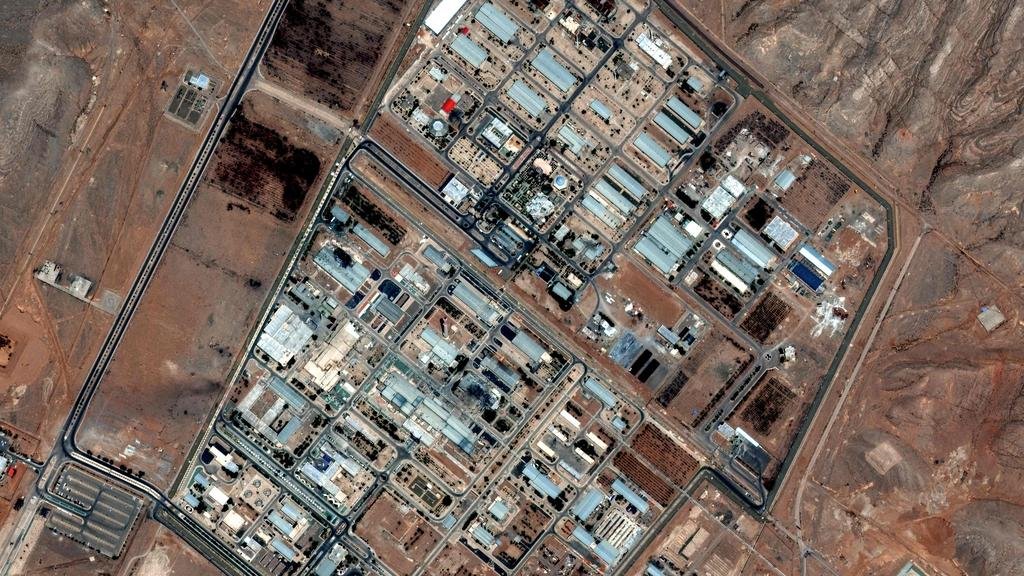

FLASHPOINT: Why Did America Strike Iran Directly?
For years, the unwritten rule was clear: the U.S. and Iran could clash through proxies, sanctions, and cyber warfare, but direct kinetic action on each other’s soil was the ultimate red line. That line has now been crossed.
According to initial reports, the targeted U.S. airstrikes were in retaliation for a devastating and sophisticated drone attack by an Iran-backed militia on a major U.S. base in the region, which resulted in significant American casualties. The White House has framed the operation as a “decisive and necessary defensive action” aimed at crippling the specific Islamic Revolutionary Guard Corps (IRGC) facilities responsible for manufacturing and exporting the advanced drone technology used in the attack.
The key distinctions of this strike are:
-
Direct, Not Proxy: This was not an attack on an Iranian-backed group in Iraq or Syria. This was a direct strike on the sovereign territory of the Islamic Republic of Iran.
-
Targeted, Not Regime Change: U.S. officials are stressing the limited nature of the targets, focusing on military assets to degrade Iran’s ability to orchestrate further attacks.
-
Crossing the Threshold: This action fundamentally alters the strategic calculus for every nation in the region, especially Israel, and sets the stage for a potentially massive Iranian retaliation.
Trump’s Reaction: “I Would Have Prevented This”
Out of office but never out of the spotlight, former President Donald Trump’s reaction was swift, predictable, and politically potent. In a series of posts on Truth Social, he simultaneously blamed the Biden administration for the weakness that invited the initial Iranian-backed attack while framing the U.S. retaliation as a move he would have handled differently.
“This never would have happened if I were President,” Trump declared. “Iran was broke and they were afraid of us. Weakness invites aggression, and now we are on the brink of another endless Middle East war because of it. Sad!”
Trump’s narrative serves two purposes:
-
Vindication of “Maximum Pressure”: He argues his policy of crippling sanctions and “peace through strength” kept Tehran in check, a message that resonates deeply with his base.
-
Political Weaponization: He uses the crisis to portray the current administration as incompetent, caught between being too weak to deter and too reckless to avoid war.
A potential Trump return to the presidency now carries an even heavier weight. Would he seek a grand bargain from a position of strength, or would his “fire and fury” rhetoric pour gasoline on an already raging fire? The uncertainty adds another layer of profound instability to the crisis. For deep dives into the strategic implications of U.S. policy, the Council on Foreign Relations (CFR) remains an essential resource.
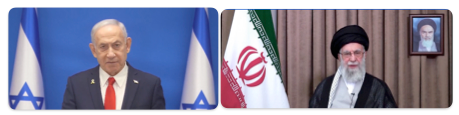

Europe in Crisis Mode: The Collapse of Diplomacy
For the European Union, the U.S. strikes represent a catastrophic failure of diplomacy. The EU, a key architect of the now-defunct JCPOA nuclear deal, has spent years trying to mediate and de-escalate tensions. Their strategy was built on keeping channels of communication open and avoiding actions that would close the door on a diplomatic solution.
That door has just been blown off its hinges.
The EU’s response has been one of frantic crisis management.
-
Desperate Calls for Restraint: EU High Representative Josep Borrell, in an emergency statement, pleaded for “maximum, superhuman restraint from all sides.” He warned, “We are no longer on the edge of the cliff; we are in the abyss. We must stop the fall.”
-
Emergency Meetings: Leaders in Brussels, Berlin, and Paris are in constant communication, trying to formulate a unified response and leverage any remaining diplomatic influence they have with Tehran to prevent an immediate, all-out retaliatory strike.
-
Economic Fears: The EU is bracing for the severe economic fallout. A full-blown conflict would see oil prices skyrocket, choking the European economy and triggering a global recession.
The EU’s role has shifted from mediator to damage control. Their greatest fear is being dragged into a conflict they desperately tried to prevent. The official portal of the European Union External Action Service (EEAS) is publishing real-time statements on their diplomatic scramble.


On the Brink of the Abyss: What Happens Now?
With U.S. missiles having hit Iranian soil, the world braces for Tehran’s response. The old scenarios are irrelevant. The new possibilities are all terrifying.
-
Iran’s “Calculated” Vengeance: Iran feels compelled to respond forcefully to restore its honor and deterrence. This could involve a massive missile strike against U.S. bases in the Gulf, a direct attack on Israeli cities, or an attempt to close the Strait of Hormuz, a chokepoint for nearly a fifth of the world’s oil supply.
-
The Regional Conflagration: Iran unleashes its entire “Axis of Resistance.” Hezbollah fires its vast rocket arsenal at Israel from the north, militias in Iraq and Syria attack U.S. forces, and the Houthis intensify attacks on shipping. This would trigger a multi-front war that would inevitably draw in Israel and the U.S. completely.
-
Global Economic Collapse: Even a limited conflict that disrupts the Strait of Hormuz would send oil prices to unprecedented levels, triggering a global economic depression, supply chain chaos, and political instability worldwide.
-
A Global Plea for De-escalation (The Last Hope): The sheer terror of the consequences forces an emergency intervention from other world powers, like China or the UN Security Council, to broker an immediate ceasefire. This is the world’s last, best hope to pull back from the brink.
For live, breaking updates from the region, global news services like Reuters are providing indispensable, on-the-ground coverage.
Conclusion: A World Holding Its Breath
The direct U.S. attack on Iran is a seismic event that has irrevocably altered the geopolitical landscape. The theoretical red lines have been vaporized, and the world is now in uncharted, treacherous waters. The Israel-Iran conflict, once a regional powder keg, now threatens to become a global firestorm.
The starkly different reactions—Trump’s “I told you so” political maneuvering and the EU’s desperate scramble to salvage diplomacy—highlight the chasm in Western approaches. But the focus now shifts entirely to Tehran. Every satellite, every intelligence agency, and every world leader is waiting and watching for one thing: the nature and scale of Iran’s retaliation. The coming hours and days will determine whether the world can pull back from the abyss or if it will witness the dawn of a devastating new war in the Middle East.